Dining Guide / Japanese Dining
Tatami Rooms and Seating
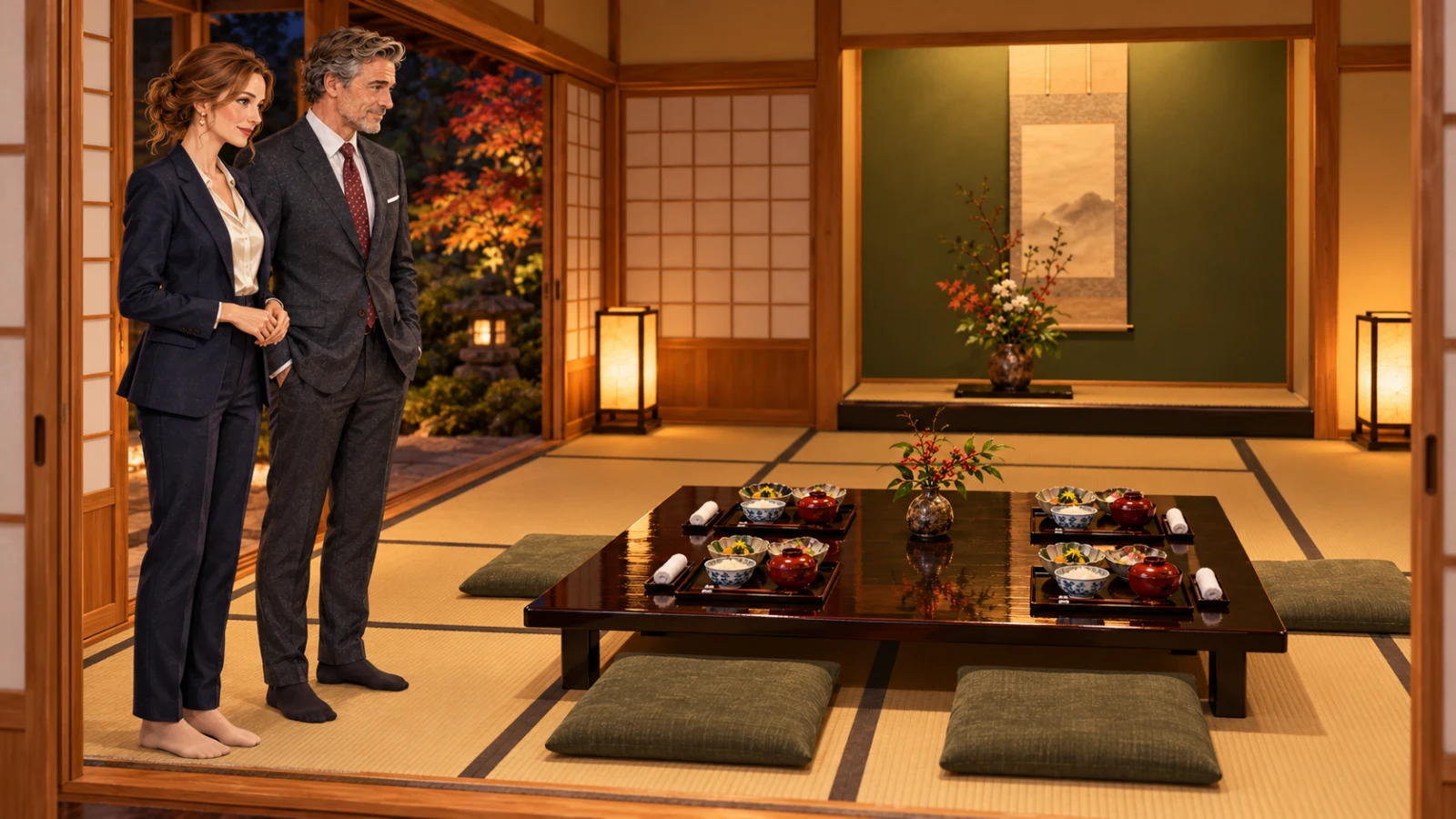
Step up into a tatami room facing forward and leave your shoes pointing out. Never step on the cushions, and know that the seat in front of the tokonoma is the seat of honor.
Key Points
- Step up facing forward, then turn, kneel and set your shoes to the side with the toes pointing out. If staff offer to take care of them, let them. Socks are better than bare feet.
- Wait to be invited before sitting on a cushion (zabuton). Never step on it — kneel beside or behind it first. Formal greetings are made off the cushion.
- Traditionally, people avoid stepping on the borders of the tatami mats and on door sills.
- The seat of honor is in front of the tokonoma, the alcove that displays a hanging scroll and flowers. Without one, it's the seat farthest from the door.
- When hosting, seat guests or senior people in front of the tokonoma and sit near the door yourself.
- The tokonoma is for display, so never put bags or coats in it.
Do
- Thank your host and take the seat you're offered
- Keep your bag beside or behind your seat
- Ask "Where would you like me to sit?" if unsure
Avoid
- Stepping up backward with your back to the room
- Stepping on floor cushions
- Putting bags or coats in the tokonoma
Handy Tip
The scroll and flowers in the tokonoma were chosen for your visit. Notice them before you sit — saying "What lovely flowers" is a gracious way to start a conversation.
Customs That Vary
Depending on the room, a seat with the best garden view may be treated as the seat of honor. In Western-style private rooms, the seat farthest from the door is often the seat of honor — see "Seats of Honor and Seating Order."
Practice in a Lesson
Sources
- Kansai Productivity Center, “Seating and Conduct in a Japanese Tatami Room” — The seat of honor by the tokonoma and conduct around thresholds, tatami borders and cushions.
- Japan National Tourism Organization, “Japanese Customs and Etiquette” — Chopsticks, oshibori towels and shared dishes in Japanese restaurants.