Dining Guide / Japanese Dining
Kaiseki Course Order
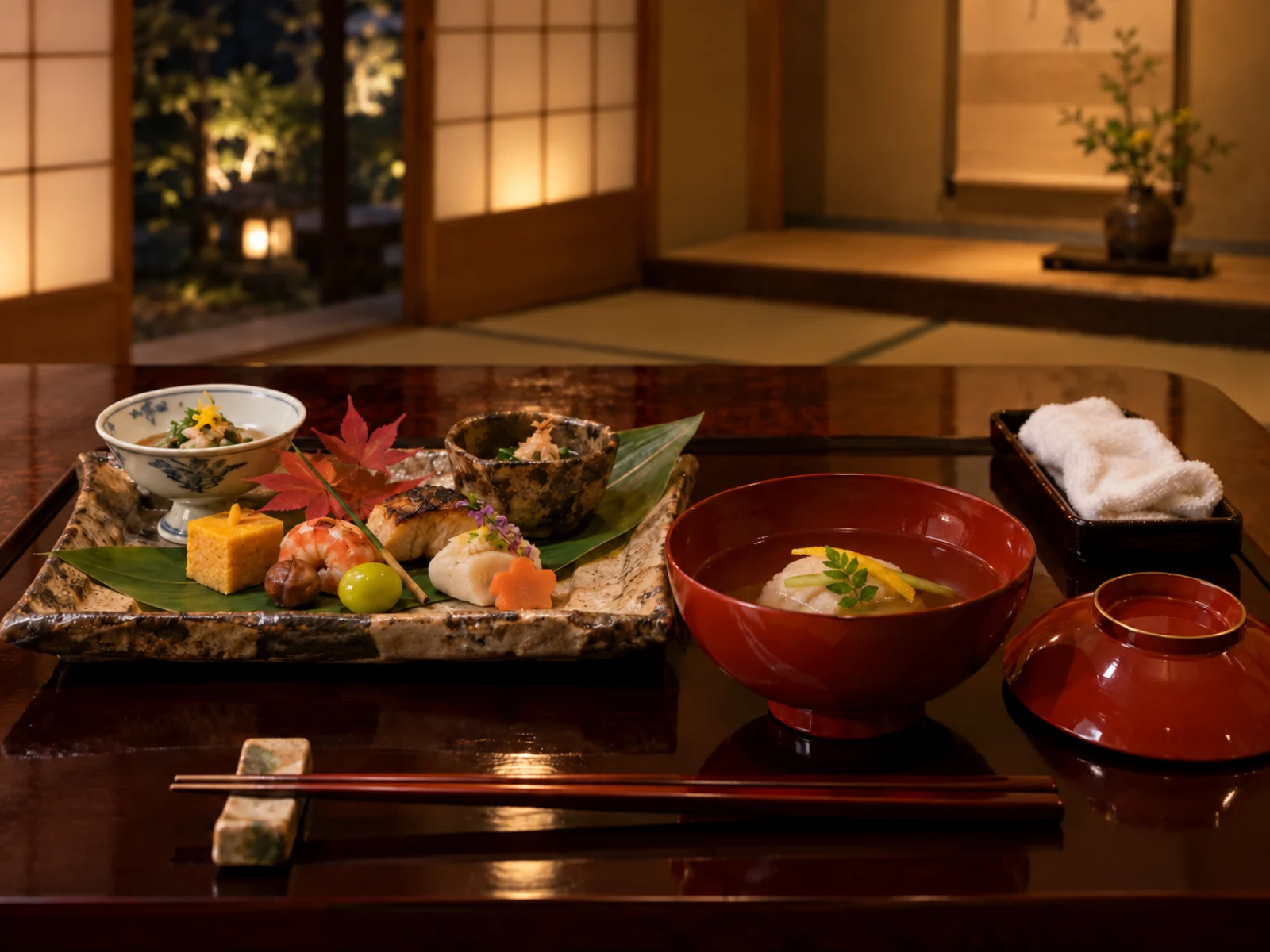
A kaiseki dinner usually starts with a small appetizer, moves through soup and grilled dishes, and ends with rice, miso soup and fruit. Here's how it flows, and how to use the oshibori towel.
Key Points
- It often begins with sakizuke (a small appetizer), then a clear soup (wanmono), sashimi (mukozuke), a grilled dish (yakimono) and a simmered dish. Fried, steamed or vinegared dishes may appear too.
- It ends with the "meal" of rice, miso soup (tome-wan) and pickles, followed by mizugashi — fruit or a light sweet.
- The number and order of dishes vary by restaurant and season. If there's a printed menu, it will guide you.
- Eat hot dishes while they're hot. When you finish a dish, put its lid back on and leave it where it is — don't stack it.
- The oshibori towel you're handed is for your hands only. Don't wipe your face or neck with it, and fold it lightly back onto its tray when you're done.
Do
- Eat hot dishes as soon as they arrive
- Leave finished dishes where they are
- Ask the staff about any dish you don't recognize
Avoid
- Stacking dishes to clear them
- Wiping your face or the table with the oshibori
- Rushing the next course
Handy Tip
Two different meals share the name kaiseki. The banquet-style one, enjoyed with sake, is the one you'll find at restaurants. The tea-ceremony kaiseki is a light meal served before tea, and it starts with rice and soup.
Customs That Vary
Course order and dish names vary by restaurant, region and season. An aperitif may come before the appetizer, and a hassun platter of small seasonal bites is often included.
Practice in a Lesson
Sources
- Ministry of Agriculture, Forestry and Fisheries (Japan), “Washoku Culture Training Text” — Japanese place settings, kaiseki, lidded bowls and whole grilled fish.
- Ministry of Agriculture, Forestry and Fisheries (Japan), “Washoku Guidebook: Setting, Chopsticks and Bowls” — Japanese tableware, bowls and prohibited chopstick actions.