Dining Guide / Japanese Dining
Holding Bowls and Lids
In Japan, small bowls are picked up and brought close to your mouth. Use the bowl or kaishi paper instead of cupping your hand, and set a lid upside down to the right of the tray.
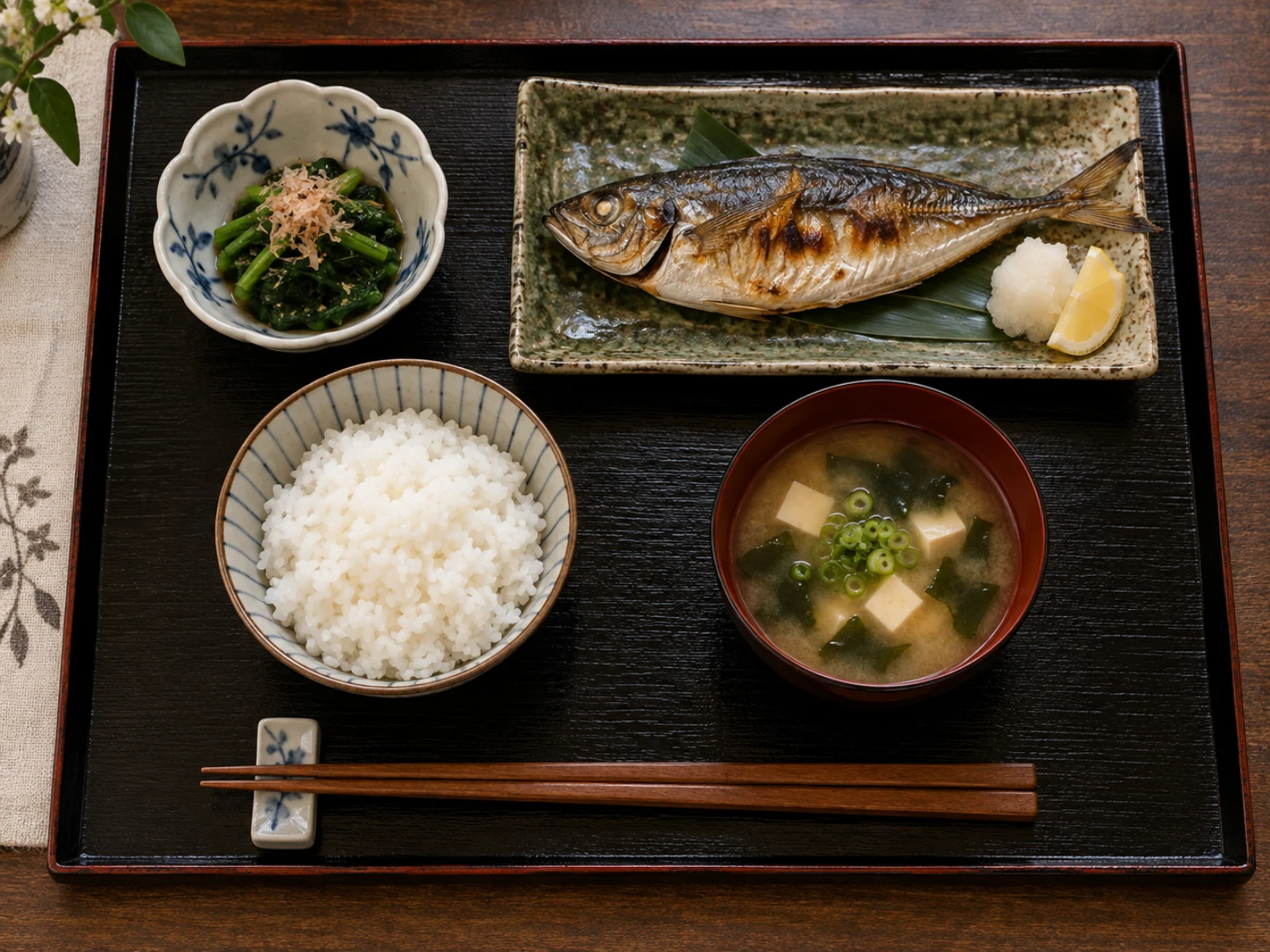
Key Points
- Pick up dishes that fit in your palm: rice bowls, soup bowls, small side dishes, small plates and the soy sauce dish.
- Leave large dishes on the table — the long fish plate, sashimi and tempura plates, shared platters. Catch drips with a small plate or kaishi paper.
- To pick up a bowl, put your chopsticks down first, lift the bowl with both hands, then hold it in your left.
- Cupping your free hand under food (te-zara, "hand plate") looks careful, but it's considered poor form in Japan.
- For a lidded bowl, steady it with your left hand, lift the lid with your right, let it drip into the bowl, and set it upside down to the right of the tray. Put it back right side up when you finish.
- If a lid is stuck, gently squeeze the rim of the bowl from both sides to let air in.
Do
- Bring small bowls up toward your mouth
- Let the lid drip before setting it down
- Put lids back on when you finish
Avoid
- Cupping your hand under food
- Lifting large plates
- Stacking a lid upside down on its bowl
Handy Tip
Kaishi — folded sheets of plain paper — are handy at Japanese meals: they catch drips, wipe the rim of a bowl, and let you hold a fish head neatly. Bring a few if you're invited to a formal dinner.
Customs That Vary
If the rice bowl also has a lid, the traditional rule is that lids from dishes on the left go to the left of the tray, and lids from dishes on the right go to the right. Details vary by restaurant and school of etiquette, so follow your companions when unsure.
Practice in a Lesson
Sources
- Ministry of Agriculture, Forestry and Fisheries (Japan), “Wa no Haizen: Japanese Place Setting” — Ichiju-sansai placement, using the hand as a plate, and handling bowl lids.
- Ministry of Agriculture, Forestry and Fisheries (Japan), “Washoku Culture Training Text” — Japanese place settings, kaiseki, lidded bowls and whole grilled fish.